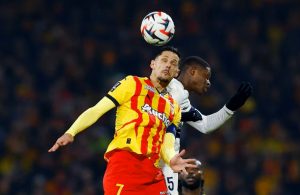
Football’s evolution often pivots on who controls space, not only possession. In Ligue 1’s 2020/2021 season, full-backs became active creators rather than supporting defenders—driving attacking progression, widening play, and directly influencing both shot creation and corner volume. Their dynamic overlaps reshaped how offensive probability and match tempo translated into tangible betting signals.
Why Full-Back Activity Redefined Ligue 1 Tactics
Teams used attacking full-backs as spatial amplifiers—compressing opponents while extending reach toward final third zones. This role blurred the line between winger and defender. When full-backs simultaneously stretch width and deliver from deep, they multiply shot entry points and cause defensive deflections leading to corners. Tactical reliance on these routes directly increased open-play conversion and set-piece frequency.
Data Highlights: Full-Back Contribution Across the Season
Overlapping runs rarely appear in static metrics, yet the 2020/2021 campaign produced measurable effects. Average corner counts rose alongside full-back progressive passes, reflecting how dynamic wing usage amplifies attack phase density.
| Player | Team | Crosses per Game | Key Passes | Corners Drawn per 90 | Tactical Use |
| Jonathan Clauss | Lens | 6.2 | 1.9 | 2.3 | Wing overload / high line |
| Léo Dubois | Lyon | 5.1 | 2.1 | 2.5 | Rotational width |
| Reinildo | Lille | 4.6 | 1.4 | 2.0 | Targeted back cross |
| Pol Lirola | Marseille | 5.8 | 1.8 | 2.4 | Dual wide progression |
| Melvin Bard | Nice | 4.3 | 1.6 | 1.9 | Hybrid support |
These values show how consistent crossing volume translates into secondary shot creation—the defining link between possession control and corner buildup.
Mechanism of Corner and Chance Generation
How overlapping width transforms defensive spacing
When full-backs advance beyond the midfield plane, defenders must zone-shift, widening their block. The resulting stretch creates funnel space between the near post and penalty mark—ideal for redirected crosses or forced clearances. Every time pressure funnels opponents toward the byline, likelihood of deflection increases, producing corner accumulation. The tactical process becomes mechanical—space extension → reactive defense → indirect chance.
Linking Tactical Overlap With Expected Shots
Shot probability naturally scales with territorial depth. Full-backs reaching deep zones convert possession into actionable contact areas; their cutback passes generate higher xG than random long-range efforts. In Ligue 1’s compressed defenses, wide progressions often remained the only stable entry path—especially for teams lacking central playmakers. Bettors interpreting shot lines benefitted from matching these tendencies to opposition structures overly reliant on narrow containment.
Translating Wing Metrics Into Betting Readings Through UFABET
In conditions where tactical wing execution directly affects market performance, ufa168 supports cross-comparison between team corner trends and live match setups. This sports betting service enables mapping of wing-oriented activity—number of crossing attempts, attacking thirds per side—against over/under corner odds. When a side known for dual full-back aggression—such as Lyon or Marseille—faces compact low blocks, corner totals often exceed nominal forecasts. Calibrating these edge patterns through ongoing match statistics converts technical analytics into actionable value across in-play observation.
When Full-Back Aggression Backfires
Pushing both defenders forward invites exposure. Once possession breaks, retreat angles shrink, causing defensive imbalance. In 2020/2021, teams like Lens occasionally conceded above-average counterattacking goals due to overextension. Betting models treating aggression merely as “chance volume” risk distortion—successful overlap must coincide with controlled recovery. Failure in transition not only undermines total dominance but erases expected shot volume through reversed momentum.
Using casino online Tactical Overlays for Visualization
Certain analytical modules connected to casino online systems visualize positional heat maps that highlight how full-backs operate within build-up sequences. By overlaying crossing zones and corner origins, analysts can spot recurrent pitch areas producing shot pressure. These diagrams convert abstract movement into operational understanding—showing how wing patterns relate to measurable sports probabilities. For informed betting, linking such visuals with ongoing performance metrics—rather than isolated statistics—anchors prediction to tactical cause, not outcome correlation.
Comparative Patterns Across Formations
How system shape modifies full-back efficiency
Three patterns emerged across Ligue 1 setups:
- 4-3-3: full-backs act as auxiliary wingers, optimizing corner frequency.
- 3-5-2: wing-backs deliver multiple cross types but expose flanks post-transition.
- 4-2-3-1: overlaps depend on pivot support; reduced depth limits direct creation.
Each variation modifies how defensive lines absorb overloads, shaping both total shot numbers and fail-safe clearances. Consistency in corner outcomes usually follows sustained 4-3-3 deployments with high territorial control—structurally reliable for “corner over” bets.
Summary
Ligue 1’s 2020/2021 campaign revealed how attacking full-backs became silent catalysts for both shot creation and corner frequency. Their spatial contribution turned tactical design into measurable probabilities—bridging formation rhythm with statistical repetition. Understanding these relationships, from overlaps to deflections, empowers bettors to interpret how width mechanics transform markets. In modern football, corners are rarely random—they are engineered through distance, discipline, and timing from the wing’s advance.